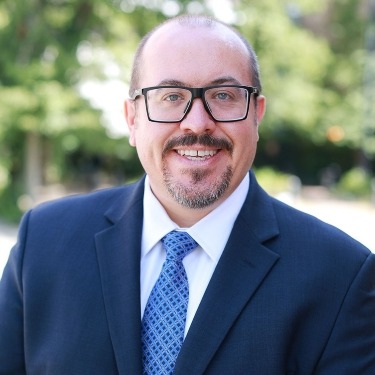
Counsel, New London
860.442.0367
tbleasdale@carmodylaw.com
Practice Areas
- Litigation
- Municipal Law
- Probate Litigation
- Land Use: Zoning, Permitting & Litigation
- Environmental
Education
- University of Connecticut School of Law, J.D., Certificate in Energy and Environmental Law
- University of Connecticut, B.A.
Bar Admissions
- Connecticut
- Mohegan Gaming Disputes Court
Court Admissions
- U.S. District Court, District of Connecticut
- U.S. Department of Veteran Affairs Benefits Claim Accreditation
|
Timothy D. Bleasdale
Tim is a member of the Litigation and Land Use practice groups, with a particular focus on appellate litigation, municipal law, civil litigation, probate litigation, and zoning issues. Tim has argued cases at both the Connecticut Supreme Court and the Connecticut Appellate Court. He also has a well-rounded perspective on navigating legal disputes involving local governments having represented both local governments as well as individuals and businesses with matters pending before or against local governments.
In 2016, Tim took a fifteen-month sabbatical to serve as a law clerk to Justice Lubbie Harper, Jr., and Judge Paul M. Foti at the Connecticut Appellate Court for the 2016-2017 term. As an Appellate Court law clerk, Tim gained substantive appellate law experience by providing legal research and writing support to his judges. The Appellate Court hears appeals in many areas of law, and provided Tim with the opportunity to work on a variety of civil and criminal appeals.
Tim previously served as a law clerk to the Connecticut Superior Court in the Tolland Judicial District and held honors clerkships and fellowships with the U.S. Environmental Protection Agency, the Connecticut Department of Energy and Environmental Protection, and the Connecticut General Assembly.
Experience
Municipal counsel to several Southeastern Connecticut municipalities.*
Briefed and argued the Supreme Court case of Dowling v. Bond et al., 345 Conn. 119 (2022), raising issues of first impression concerning slander of title under the Connecticut Marketable Record Title Act.*
Briefed and argued the Appellate Court case of Thoma, Trustee v. Watson et al., 228 Conn. App. 537 (2024), involving an adverse possession claim.*
Principle author of brief in the Supreme Court cases of:
- Lyme Land Conservation Trust, Inc. v. Platner, 325 Conn. 737 (2017), a leading case on Connecticut’s conservation easement enforcement statute, General Statutes § 52-560(a).*
- Lyme Land Conservation Trust, Inc. v. Platner, 334 Conn. 279 (2019), a leading case regarding state statute, General Statutes § 51-183(c), providing for mandatory recusal of trial judges on remand from Appellate or Supreme Courts.*
Obtained an annual service-connected disability benefit of nearly $17,000 per year for life for a veteran suffering from post-traumatic stress disorder as the result of a unreported sexual assault that occurred during the veteran’s military service 30 years earlier. This result is particularly remarkable because the unreported nature of the assault meant that there was very little direct contemporary evidence of the assault to support the claim, and proving the claim required a careful attention to detail and marshaling of indirect evidence.*
*Experience from a prior firm.
Affiliations
Waterford Planning and Zoning Commission
Southeastern Connecticut Council of Governments Regional Planning Commission
Connecticut Association of Municipal Attorneys
Community
- Volunteer attorney with Connecticut Veterans Legal Center
- Volunteer with Scouting America (formerly the Boy Scouts of America), Secretary - Pack 36 Leadership Committee, Den Leader - Pack 36, Merit Badge Counselor
|